
Learning from the Experts: LGBTIQ Refugees Play a Key Role in ORAM’s Inclusion Training in Kenya


For years, ORAM’s Inclusion Program has worked to help humanitarian organizations better understand and respond to the unique challenges facing LGBTIQ refugees and asylum seekers.
However, ORAM’s latest inclusion training in Nairobi and Kakuma Refugee Camp introduced a significant change.
LGBTIQ refugees participated not only as attendees but also as co-leaders.
With support from the Embassy of the Federal Republic of Germany in Nairobi, ORAM’s Inclusion Program is bringing refugee leaders directly into training spaces with humanitarian and human rights organizations.
Louis Sidigu, ORAM’s Inclusion Officer in Kenya, believes this approach embodies meaningful inclusion.
“True understanding begins by acknowledging refugees as the ultimate experts of their own lived experiences,” Louis shared. “No manual or organizational policy can replicate the profound insights gained from listening directly to LGBTIQ refugees.”
The current project builds on ORAM’s previous inclusion work in Kenya and places greater emphasis on localization and refugee leadership.
Earlier this year, ORAM strengthened the skills of 12 LGBTIQ refugee facilitators to deliver inclusion workshops. These facilitators developed expertise in training, leadership, audience engagement, and managing complex discussions.
They then had the opportunity to put those skills into practice.
During recent sessions in Nairobi and Kakuma, refugee facilitators worked alongside ORAM to train 31 representatives from humanitarian and human rights organizations on advancing the inclusion of people with diverse sexual orientations, gender identities and expressions, and sex characteristics (SOGIESC).
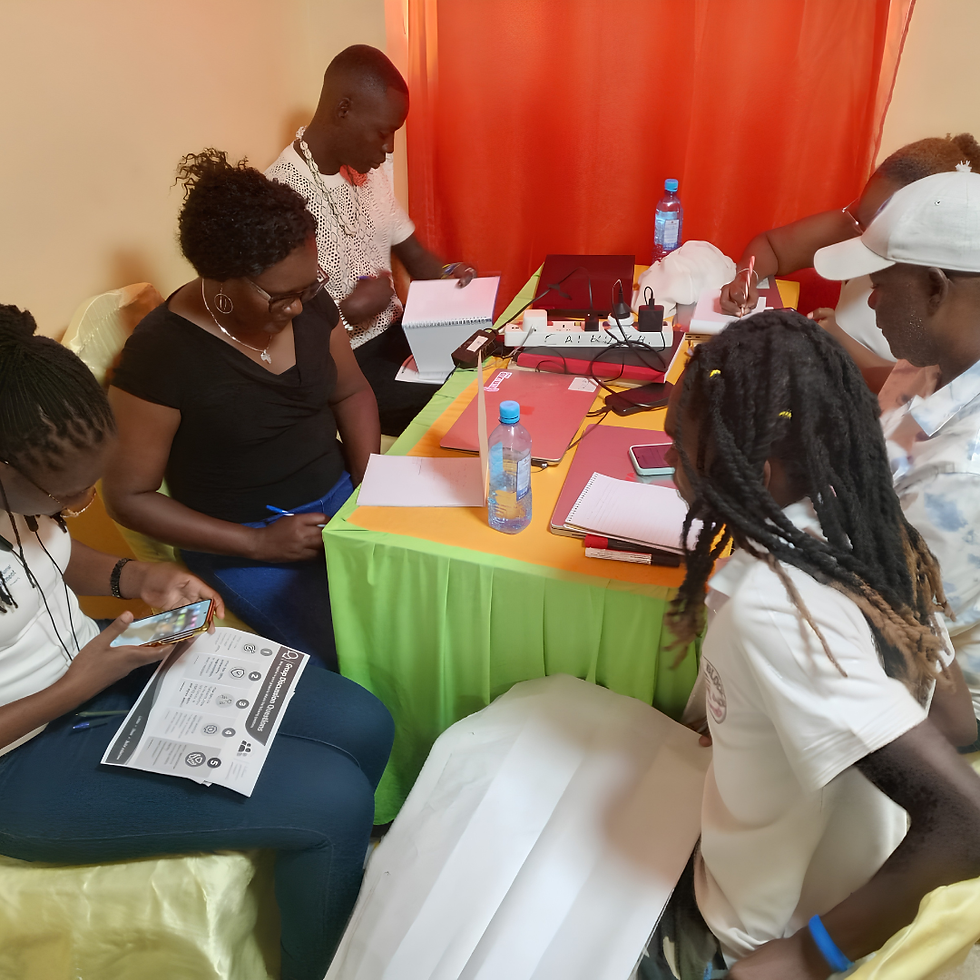
The training focused on helping participants better understand the experiences of LGBTIQ refugees and identify practical ways to make programs and services more inclusive.
For Louis, bringing refugee facilitators into the room transforms the learning experience.
“Centering these authentic voices makes our learning deeply personal and impactful,” he said.
It also broadens who is recognized as an expert.
Humanitarian programs have traditionally relied on organizational policies, technical guidance, and training manuals. While these tools remain important, Louis believes humanitarian organizations can use them more effectively when they pair them with insights from people who navigate these systems firsthand.
During the project, Louis and the ORAM team worked closely with facilitators to build confidence and strengthen their ability to manage anxiety, address challenging questions, and navigate high-pressure discussions.
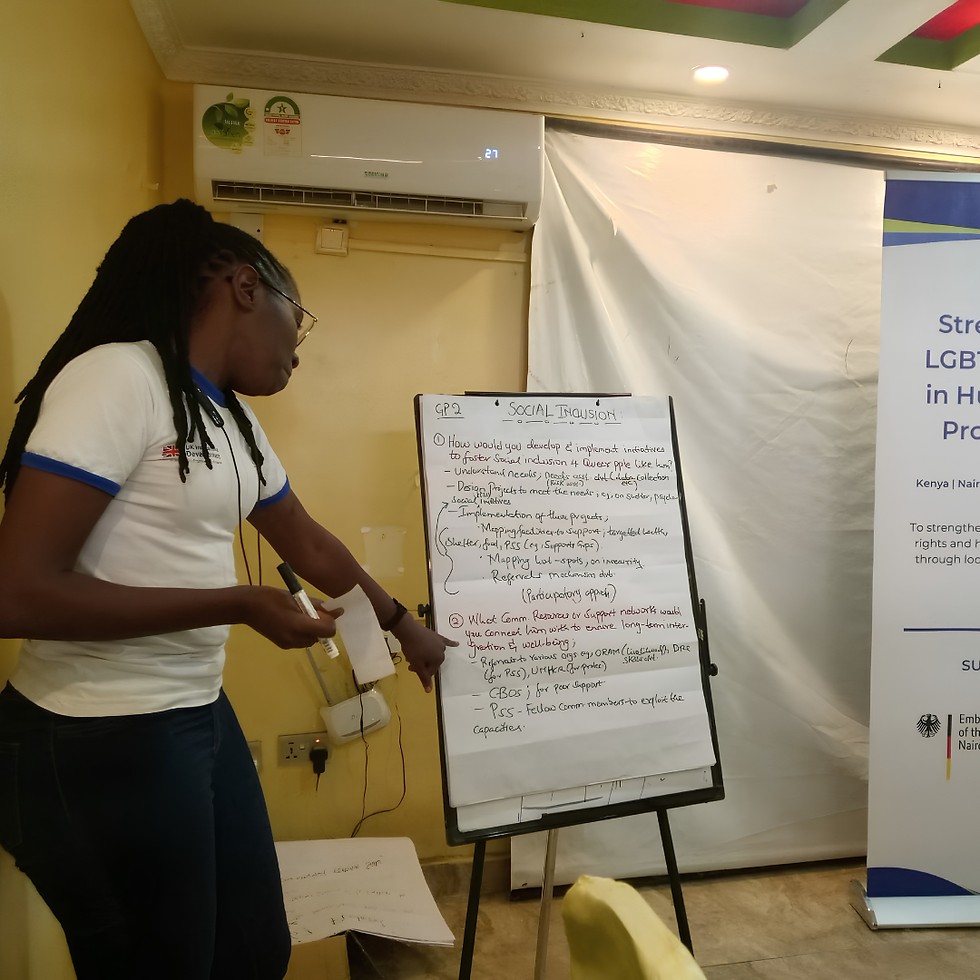
“Beyond facilitation skills, the participants gained the ability to engage constructively with diverse audiences, including humanitarian staff and community leaders,” Louis explained.
For ORAM, this approach aligns with a main goal of the inclusion program: ensuring LGBTIQ refugees actively shape the programs and systems that affect their lives.
It also acknowledges that organizations cannot fully understand barriers to housing, healthcare, protection, psychosocial support, or other humanitarian services without listening to people who encounter those barriers directly.
By creating space for LGBTIQ refugee facilitators to share their expertise with service providers, ORAM aims to move beyond awareness toward more responsive humanitarian programming.
The recent training sessions are only one part of the project.
Humanitarian and human rights organizations have also worked together to develop and refine an inclusion training module that reflects the Kenyan context. Feedback from participants and refugee facilitators will help ORAM further strengthen the module and improve future training sessions.
Before the project concludes at the end of the year, ORAM will bring together LGBTIQ refugee facilitators, training participants, community representatives, and others participating in the project for a reflection and learning session. This gathering will review successes, identify challenges, recognize facilitators’ contributions, and capture lessons for future inclusion programming.
For Louis, the direction of the work is clear.
“Inclusion must go beyond creating programs for LGBTIQ refugees. It also requires creating opportunities for LGBTIQ refugees to influence how organizations design and deliver those programs,” he shared.
When refugee leaders have a seat at the table and a role at the front of the room, humanitarian organizations can learn directly from the people whose experiences should inform their work.
ORAM is grateful to the Embassy of the Federal Republic of Germany in Nairobi for supporting this work and expanding opportunities for LGBTIQ refugee leaders to advance inclusion within Kenya’s humanitarian and human rights sectors.


I appreciate guides that focus on practical information rather than complicated technical language. Readers exploring 10.0.0.1 can learn more about accessing router settings, reviewing configuration options, and handling common network management tasks with greater confidence.
The appeal of 2048 free game comes from its balance between accessibility and strategy. New players can understand the basic mechanics within minutes, while experienced players can spend much longer developing techniques for achieving higher tiles and scores.
Basketball Bros is really fun when both players are defending well. Finding even one clean opening can feel like a major accomplishment.
Truly powerful and encouraging read! It is wonderful to see ORAM centering LGBTIQ refugee voices as co‑leaders rather than just beneficiaries in these inclusion workshops. This lived‑experience‑driven approach makes such critical sense for building more responsive humanitarian services. It sets a fantastic example for other organizations across the sector. Huge recognition for every refugee facilitator contributing their knowledge and leadership. Great work covering this important project! --bike bros
This article highlights the importance of including LGBTIQ refugees in decisions that affect their lives. I appreciate how ORAM empowers refugee leaders to share their experiences and help humanitarian organizations develop more inclusive services. Sharing real-life experiences through educational resources can also raise awareness, and amazon book publishing provides authors with an opportunity to publish informative books that reach a wider audience.